

UNESCO Chair strategic meeting at EAWAG: Advancing holistic approaches to health and wellbeing
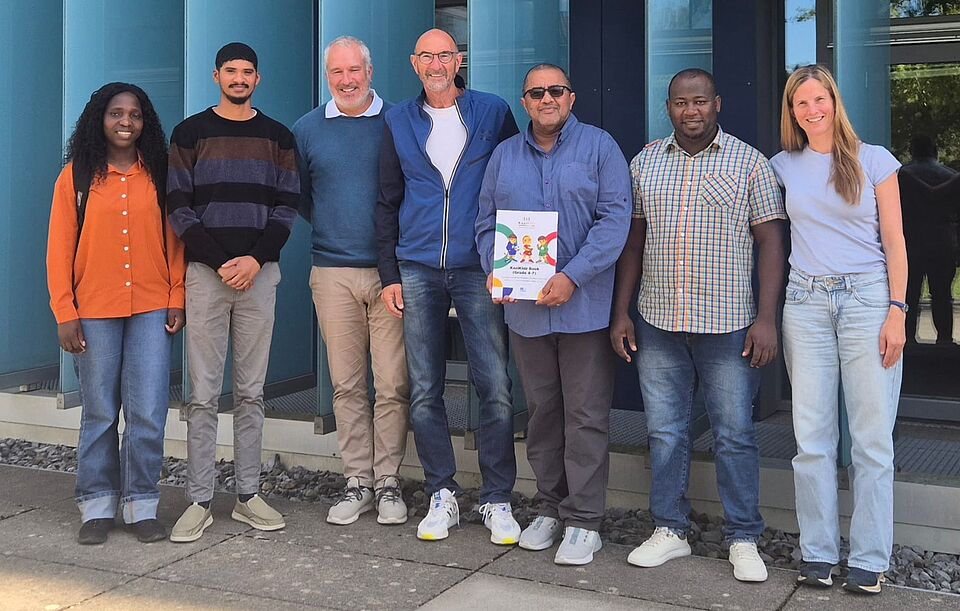
From left to right: Ms Nomthandazo Pukwana (Nelson Mandela University), Mr Jonathan Joseph (Nelson Mandela University), Dr Ivan Müller (Uni Basel), Prof. em. Dr Uwe Pühse (Uni Basel), Dr Bruce Damons (Director of the Engagement Office, Nelson Mandela University), Dr Nelson Mandela (Nelson Mandela University), and PD Dr Elisabeth Janssen (EAWAG) (source: UNESCO Chair; Sept 2026)
The UNESCO Chair in Basel met with Dr Bruce Damons (Director of the Engagement Office) from Nelson Mandela University and his team, as well as with PD Dr Elisabeth Janssen from EAWAG, to discuss strategic priorities, review the UNESCO Chair’s current activities and explore opportunities for future collaboration.
Strengthening collaboration between the University of Basel and Nelson Mandela University
On Friday, 11 September 2026, representatives of the UNESCO Chair on 'Physical Activity and Health in Educational Settings' at the University of Basel met with colleagues from Nelson Mandela University and EAWAG at the Swiss Federal Institute of Aquatic Science and Technology. The meeting brought together Prof. em. Dr Uwe Pühse (Uni Basel), Dr Bruce Damons (Director of the Engagement Office, Nelson Mandela University), Ms Nomthandazo Pukwana (Nelson Mandela University), Mr Jonathan Joseph (Nelson Mandela University), Dr Nelson Mandela (Nelson Mandela University), PD Dr Elisabeth Janssen (EAWAG), and Dr Ivan Müller (Uni Basel).
The strategic meeting aimed to initiate a joint dialogue between the UNESCO Chair’s two home institutions, the University of Basel and Nelson Mandela University, and to reflect on the Chair’s current activities and future strategic direction.
From physical activity to holistic interventions for health
A central theme of the discussions was the development of holistic, multidimensional interventions that address health and wellbeing in educational settings. The exchange highlighted the importance of moving beyond isolated health promotion measures and considering the wider environmental and social conditions that shape children’s health, learning and everyday lives.
Within this perspective, water management and hygiene standards were discussed as important components of comprehensive school health interventions. Access to safe water, appropriate hygiene practices and healthy school environments are closely connected to the wellbeing of learners and the successful implementation of health promoting activities in schools.
Reflecting on the KaziPlay UNESCO Good Practice Method
Another focus of the meeting was the reflection on current UNESCO Chair work, including the KaziPlay UNESCO Good Practice Method: Healthy Schools for Healthy Communities, which is featured in the UNESCO SDG 4 Knowledge Hub.
The KaziPlay UNESCO Good Practice Method provides a valuable example of a holistic approach to health and wellbeing in educational settings. The initiative connects physical activity, play, health education and healthy school environments, creating opportunities to address multiple dimensions of wellbeing in schools and communities.
During the meeting, the KaziKidz book for Grades 4–7 was also formally handed over to the responsible representatives at Nelson Mandela University, marking a further step in strengthening the collaboration between the UNESCO Chair’s two home institutions.
The discussions explored how these interconnected dimensions can inform the further development of multidimensional interventions. In particular, water quality, water contamination, wastewater management and school garden water management were considered relevant aspects of creating healthy and sustainable school environments.
The exchange encouraged a broader understanding of the UNESCO Chair’s work and its potential to contribute to the Sustainable Development Goals, particularly in the areas of good health and wellbeing, quality education, clean water and sanitation, and sustainable communities.
Looking ahead: Strengthening the UNESCO Chair partnership
The meeting at EAWAG marked an important step in strengthening strategic cooperation between the University of Basel and Nelson Mandela University, the UNESCO Chair’s two home institutions. By bringing together expertise from physical activity and health promotion, educational research and aquatic science, the discussions created a valuable basis for future collaboration and joint reflection.
The meeting also highlighted the importance of continued dialogue between the two home institutions in developing holistic interventions that address the diverse health, educational and environmental needs of school communities.
The UNESCO Chair thanks Dr Bruce Damons and his team, as well as PD Dr Elisabeth Janssen, for the constructive exchange of views and looks forward to continuing the strategic dialogue and exploring further opportunities for collaboration in the development of holistic interventions for health and wellbeing in educational settings.
Quick Links