

UNESCO Chair contributes expertise to UNESCO consultation on emergency preparedness, response and recovery in Physical Education
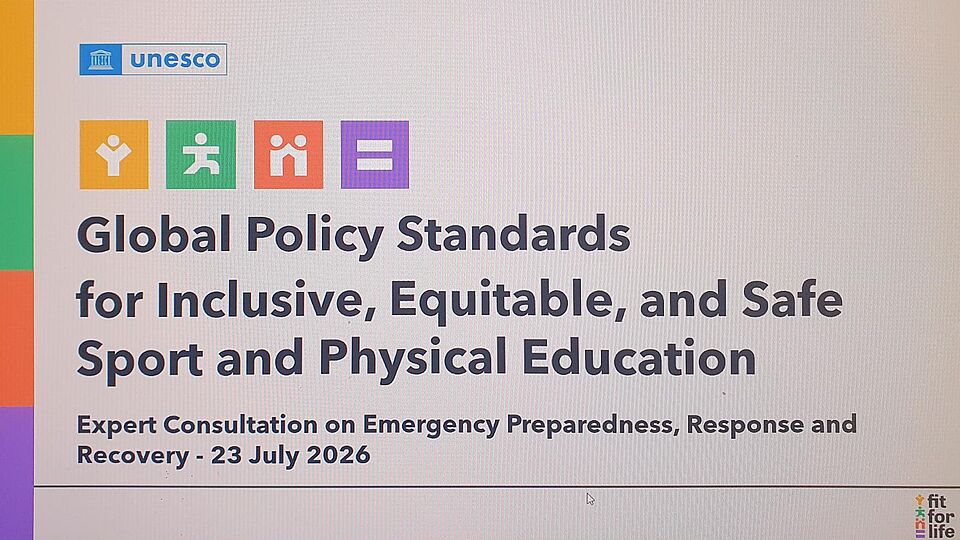
Online discussions took place on the integration of sport and Physical Education (PE) into framework strategies for disaster prevention, management and recovery, both at national level and within the context of international cooperation and aid mechanisms, with a view to ensuring the continuity of sport and PE systems and supporting populations affected by crises through sport and PE.
The UNESCO Chair on 'Physical Activity and Health in Educational Settings' at the University of Basel and Nelson Mandela University contributed to UNESCO's Expert Consultation on the proposed Global Policy Standard on Emergency Preparedness, Response and Recovery, held online on 23 July 2026 as part of UNESCO's Fit for Life Sport Alliance initiative.
The consultation brought together international experts, UNESCO Chairs, policymakers, practitioners and representatives from the sport, education and humanitarian sectors to review the draft Global Policy Standard before it proceeds to Member State consultations and consideration within the MINEPS VIII process. The proposed standard seeks to strengthen the integration of sport and Physical Education (PE) into emergency preparedness, response and recovery frameworks, while protecting the continuity of inclusive, equitable and safe sport and PE during crises. It also recognises the important role that sport and PE can play in promoting psycho-social well being, resilience and social cohesion in emergency contexts.
The UNESCO Chair contributed to the expert discussions by emphasising that PE should be recognised as an essential component of resilient education systems rather than as an optional activity during emergencies. Drawing on research and international policy developments, the UNESCO Chair highlighted that quality PE supports children's and young people's psycho-social well-being, inclusion, resilience and social connectedness during crises and therefore deserves stronger integration into emergency planning and educational recovery efforts. The UNESCO Chair also stressed the importance of strengthening the evidence base for policy implementation and ensuring that sport and PE are embedded across education, health and emergency governance systems. These contributions align closely with the Chair's ongoing work on quality PE, sport for development, and evidence informed policy-making at national and international levels.
The consultation formed part of UNESCO's broader development of the Global Policy Standards for Inclusive, Equitable and Safe Sport and Physical Education (2026–2027). Participants reviewed the proposed scope, indicators and implementation measures, providing recommendations to enhance the clarity, feasibility and global applicability of the new standard before its submission to Member States.
For further information, see the 'Contact us' details on the UNESCO Chair website.
Quick Links