

The UNESCO Chair is part of the Global Physical Literacy Action Framework
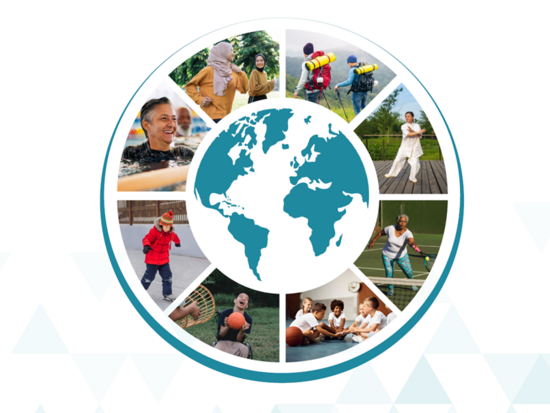
'Physical Literacy' is understood as a broad, holistic concept that supports lifelong learning and development across a wide range of contexts throughout a person’s life (source: Global Physical Literacy Action Framework © GloPL Consortium & Institute for Physical Activity and Nutrition, Deakin University, Australia, February 2026).
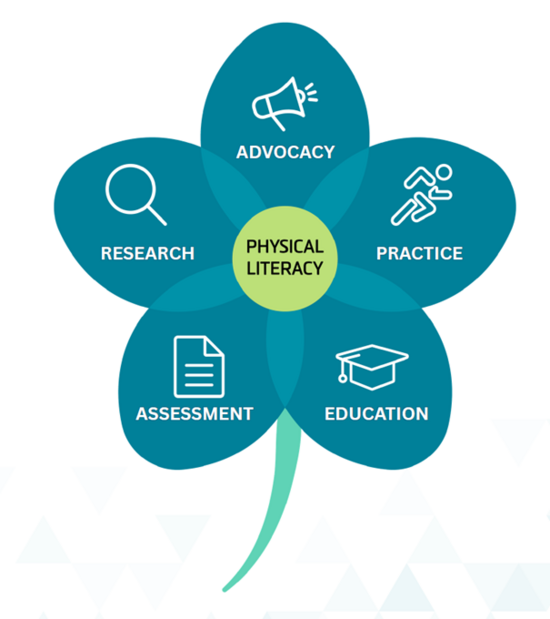
The Physical Literacy Flower is a graphic representation of the concept of Physical Literacy. It aims to show that movement competence is not just about fitness or technique, but consists of several interrelated areas that grow together like the petals of a flower (source: Global Physical Literacy Action Framework © GloPL Consortium & Institute for Physical Activity and Nutrition, Deakin University, Australia, February 2026).
Physical Activity offers numerous health and wellbeing benefits and can nurture personal development. Physical Literacy is the foundation of lifelong Physical Activity.
Although there is currently no global consensus on the definition of Physical Literacy, yet the definitions are all more similar than different. It encapsulates the various integrated capabilities that shape a person’s engagement in Physical Activity, such as affective/emotional (e.g., motivation or confidence), physical (e.g., movement skills or fitness) and cognitive (e.g., knowledge or understanding) capabilities. Some countries also recognize social, spiritual, perceptual or nature-based dimensions as integral to Physical Literacy. However, global Physical Activity levels are declining or remain low, and most countries are ‘off track’ in their goal to reduce physical inactivity by 2030. This indicates that many countries are not fully harnessing the comprehensive potential of Physical Activity.
Shift Towards Quality of Experience
The framework responds to stagnating global Physical Activity levels by proposing a shift in focus toward the quality of movement experiences. It understands Physical Literacy as a holistic concept that integrates affective (emotions), cognitive (brain), and physical (body) capabilities. The goal is to foster the knowledge, understanding, motivation, confidence, and empower individuals to engage in meaningful movement and sustain lifelong participation in physical activity, exercise and sport.
The reduction in Physical Activity can also be observed in South Africa and has intensified during the COVID-19 pandemic. Therefore, the UNESCO Chair contributes to the dissemination of Physical Literacy through its KaziKidz Foundation Phase and KaziKidz Intermediate and Senior Phase Short Learning Programmes (SLPs) in South Africa and is committed to continuing and intensifying this (dissemination) work in the future as part of its UNESCO mandate on Quality Physical Education (QPE). The framework - the Global Physical Literacy Action Framework - is developed for everyone who has an interest and role in promoting Physical Activity, including policymakers, educators, coaches, health professionals, academics and community managers.
Key Action Areas
The document establishes five interlinked pillars designed to move the field forward:
- Advocacy: Increasing awareness and policy support.
- Practice: Enhancing the delivery of quality experiences.
- Education: Supporting professional development and learning.
- Assessment: Developing meaningful ways to monitor progress.
- Research: Strengthening the evidence base.
For further questions, either contact Dr Johannes Carl (j.carl@deakin.edu.au), the consortium lead, as listed on the last page of the framework document for commercial use and inquiries on rights and licenses, or the UNESCO Chair's representatives Prof em. Dr Uwe Pühse, Prof em. Dr Cheryl Walter, Prof em. Dr Rosa du Randt, Dr Danielle Dolley, Dr Siphesihle Nqweniso or Dr Ivan Müller.
Quick Links