

Policy brief to UNESCO supported by the UNESCO Chair
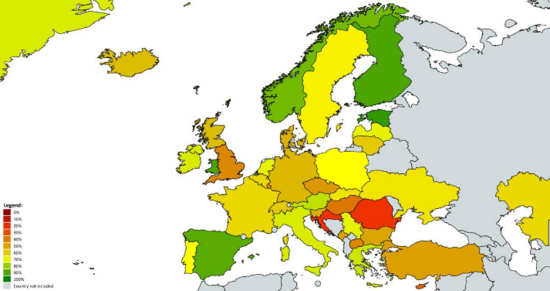
School Physical Education in Europe only partly aligned with 'Physical Literacy', while Switzerland demonstrates relatively strong alignment with the Physical Literacy principles.
A new policy analysis prepared for UNESCO reveals that school Physical Education curricula across Europe are only partly aligned with the concept of ‘Physical Literacy’. Although there is currently no global consensus on the definition of Physical Literacy, yet the definitions are all more similar than different. This concept refers to the holistic development of movement skills, motivation, knowledge, and social-emotional competencies, key foundations for lifelong health, participation, and well-being.
The study was conducted by the international research network EUROPLIT Group. In total, 72 researchers from 40 countries evaluated national Physical Education curricula using a framework of 15 criteria. The goal was to assess how closely education systems reflect UNESCO’s vision of quality, inclusive Physical Education. The UNESCO Chair on 'Physical Activity and Health in Educational Settings' contributed expertise from a Swiss perspective.
Findings show a mixed picture across Europe. Some countries, including Switzerland, demonstrate relatively strong alignment with Physical Literacy principles, while others still face significant gaps. Major barriers include differing national definitions of the concept, challenges in translating it into curricula, and limited teacher training opportunities. Well-designed Physical Education not only supports active lifestyles but also strengthens educational outcomes, inclusion, and long-term public health. As such, Physical Literacy contributes directly to several global Sustainable Development Goals, particularly in health, education, and equality.
The authors recommend that UNESCO continue strengthening its leadership role by supporting curriculum reforms, investing in teacher education, and promoting international collaboration. These efforts are seen as essential to embedding Physical Literacy more consistently and sustainably within education systems across Europe.
Source: The EUROPLIT Group, 2026 (with attached linked policy brief to UNESCO).
Quick Links