

New KaziKidz book strengthens Quality Physical Education from Grade 4 to 7
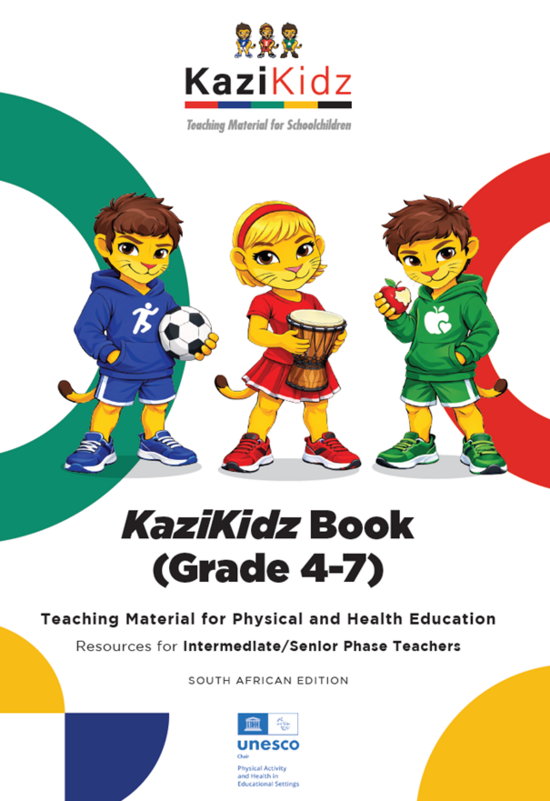
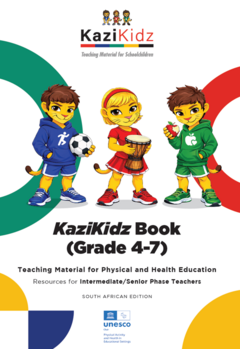
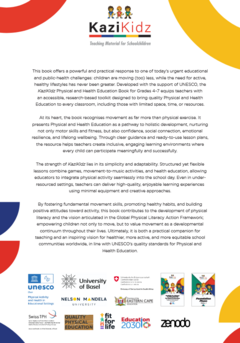
Front Cover of the KaziKidz Book (Grades 4-7) (source: UNESCO Chair Consortium, South Africa and Switzerland, September 2026).
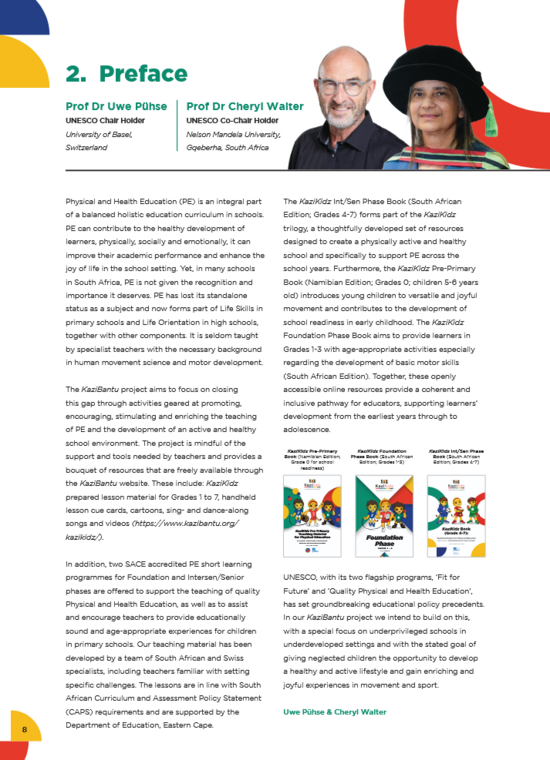
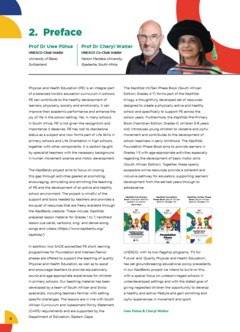
Preface by Prof Dr Uwe Pühse, UNESCO Chair Holder, and Prof Dr Cheryl Walter, UNESCO Co-Chair Holder, to the KaziKidz Book (Grades 4-7) (source: UNESCO Chair Consortium, South Africa and Switzerland, September 2026).
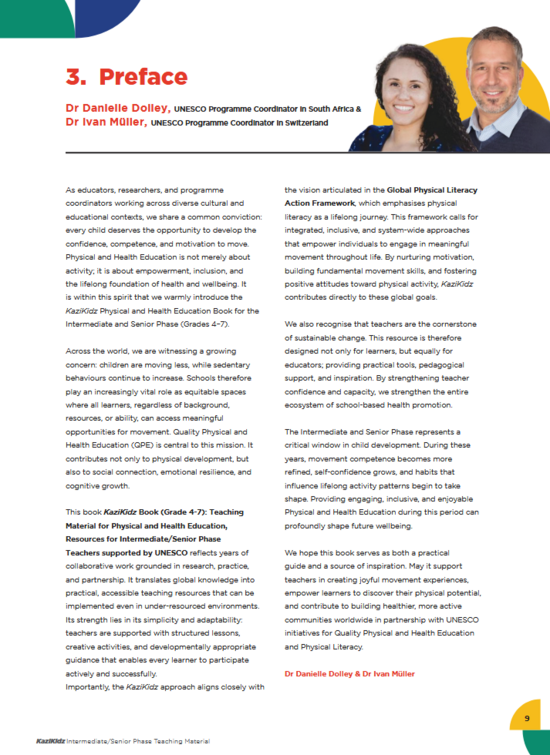
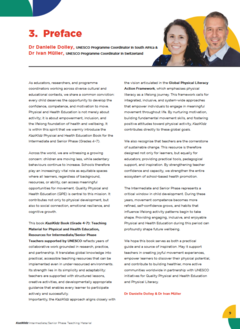
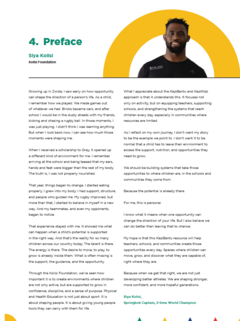
Preface by Dr Danielle Dolley, Programme Co-ordinator South Africa, and Dr Ivan Müller, Programme Co-ordinator Switzerland, to the KaziKidz Book (Grades 4-7) (source: UNESCO Chair Consortium, South Africa and Switzerland, September 2026).
New book published by the UNESCO Chair.
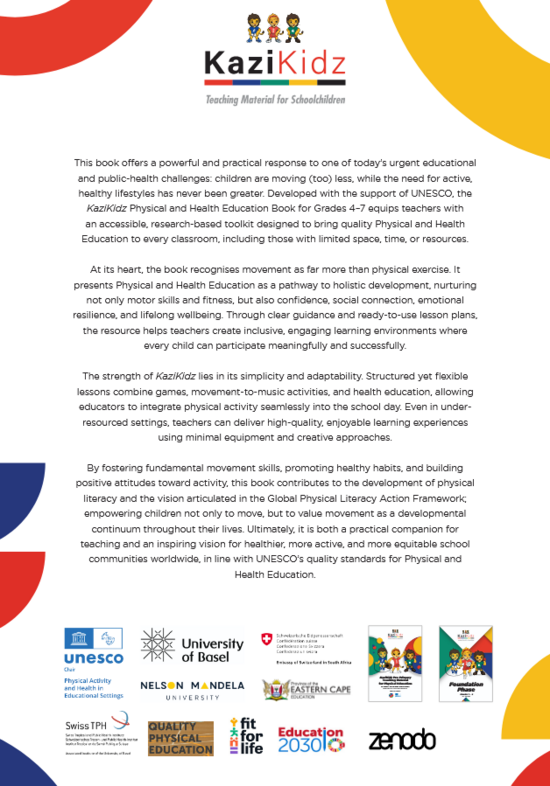
A novel KaziKidz book for Grades 4 to 7 has been published, completing a trilogy of freely accessible teaching resources for Physical and Health Education. Developed through a long-standing collaboration between researchers, educators, schools, education authorities, and international partners in Switzerland, South Africa, and Namibia, the new publication provides practical, evidence-based resources for teachers, including in resource-constrained settings.
The KaziKidz Book (Grade 4–7): Teaching Material for Physical and Health Education Resources for Intermediate/Senior Phase Teachers supported by UNESCO – South African Edition comprises 572 pages and complements the existing KaziKidz materials for Pre-Primary and Grades 1–3. Together, the three books cover the school years from Pre-Primary through Grade 7.
More than movement
KaziKidz is based on the understanding that Physical Education is about more than sport and physical fitness. Quality Physical Education can support motor development while also strengthening confidence, social skills, emotional wellbeing, health literacy, and a lifelong positive relationship with movement.
The new resource combines practical Physical Education lessons with health education, psychosocial wellbeing, and active learning. It includes structured activities and games that can be adapted to different school environments and implemented with limited equipment.
Siya Kolisi: “The potential is already there”
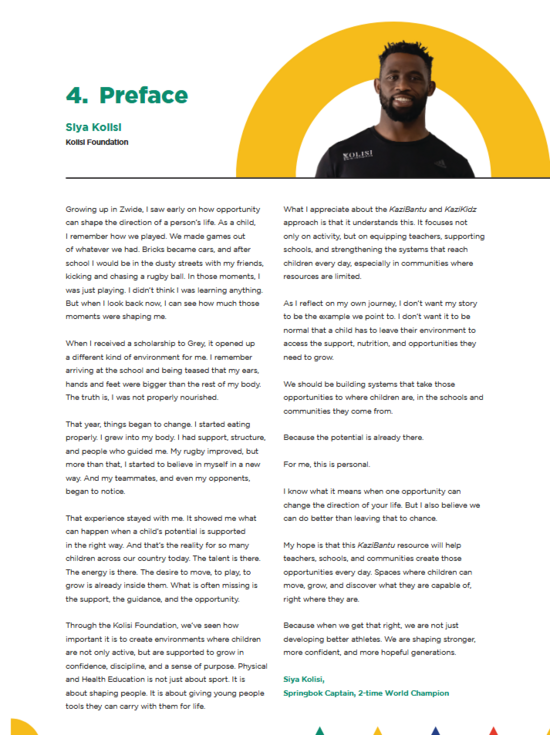
A particularly powerful perspective comes from Siya Kolisi, Springbok captain and two-time Rugby World Cup champion, who contributes the foreword to the new publication.
Kolisi’s connection to the KaziBantu and KaziKidz vision is deeply personal. Growing up in Zwide, he experienced how movement and play can shape a child’s development, even where resources are limited. Playing rugby with friends in the streets, he developed skills, confidence, relationships, and a sense of possibility.
A decisive change came when he received a scholarship to Grey High School. There, access to better nutrition, structure, guidance, and people who believed in him helped him develop both physically and personally.
Looking back, Kolisi sees his story as an example of what can happen when children are given the right opportunities. But he does not want his journey to remain an exceptional story. His message is that the potential is already there in many children. What is often missing are the support, guidance, and opportunities that allow this potential to flourish.
This connects directly with the KaziBantu approach. Children should not have to leave their communities to gain access to the conditions they need to succeed. Instead, opportunities for healthy development should be created within the schools and communities where children grow up.
Kolisi’s contribution therefore goes beyond an endorsement of the book. His story illustrates why access to high-quality Physical and Health Education matters: schools can become places where children not only move and learn, but also develop confidence and discover what they are capable of.
A trilogy of resources
The new publication completes the KaziKidz trilogy:
- Pre-Primary: Teaching material for school readiness and Physical Education.
- Grades 1–3: Resources for Foundation Phase teachers.
- Grades 4–7: The new South African edition for Intermediate and Senior Phase teachers.
The trilogy reflects more than a decade of interdisciplinary collaboration and is developed under the auspices of the UNESCO Chair on “Physical Activity and Health in Educational Settings”. The latest publication is endorsed by UNESCO Switzerland and UNESCO South Africa.
All three resources are freely accessible. The new Grade 4–7 book is available through Zenodo under a Creative Commons Attribution 4.0 International licence, supporting the wider dissemination of high-quality Physical and Health Education resources.
Ultimately, KaziKidz is built around a simple idea: every child should have the opportunity to move, learn, grow, and develop their potential, regardless of where they grow up. As Siya Kolisi’s story reminds us, the potential is already there. The challenge is to create the conditions in which it can flourish.
Access the publication:
KaziKidz Book (Grade 4–7): Teaching Material for Physical and Health Education Resources for Intermediate/Senior Phase Teachers supported by UNESCO – South African Edition DOI: 10.5281/zenodo.20395039
Quick Links