
Health-related fitness testing with Siyaphakama schools

2nd- and 3rd-year HMS students from the Nelson Mandela University joined the KaziBantu Project and its involvement in the Siyaphakama Programme to complete health-related physical fitness assessments (source: Nelson Mandela University, November 2025).


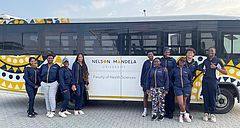
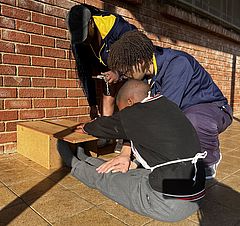

In 2025, 2nd- and 3rd-year Health and Movement Science (HMS) students from Nelson Mandela University joined the KaziBantu Project in its ongoing Siyaphakama Programme activities to conduct comprehensive health-related physical fitness assessments with learners in five partner schools.
In total, the team tested over 200 children, gathering valuable data on flexibility, strength, endurance and other key indicators of physical wellbeing.
Why these tests matter
Health-related fitness testing does more than produce numbers, it reveals the physical strengths and needs of learners so teachers, coaches and programme partners can plan targeted interventions. The information helps us to:
- Identify areas where learners need extra support (strength, cardiovascular fitness, flexibility)
- Monitor progress over time and measure the impact of school PE programmes
- Inform teacher coaching and resource allocation so PE lessons are inclusive and effective.
Real work-integrated learning (WIL) for NMU students
For NMU’s HMS students this was a real-world learning environment. By conducting assessments in school settings they:
- Applied theoretical knowledge in real contexts
- Developed practical skills in testing protocol, data collection and learner engagement
- Gained experience working directly with children and school staff, preparing them for future professional roles.
This hands-on experience aligns with Nelson Mandela University’s core mandate of community engagement and social responsibility, giving students the chance to learn through service while contributing positively to local schools.
Alignment with the Sustainable Development Goals
This work speaks directly to the United Nations Sustainable Development Goals, particularly SDG 3: Good Health and Well-Being and SDG 4: Quality Education. Through comprehensive health-related fitness testing, the Siyaphakama Programme promotes early identification of physical health needs and encourages active, healthy lifestyles among learners, key components of SDG 3. At the same time, the involvement of NMU’s HMS students reinforces SDG 4 by integrating practical, real-world experiences into their academic training, ensuring that education goes beyond theory to include meaningful community engagement and hands-on learning. By strengthening PE delivery in partner schools and embedding work-integrated learning into university training, the programme contributes to more equitable, holistic, and high-quality educational opportunities for both learners and students.
For further detailed information, please contact: Dr Danielle Dolley (danielle.dolley@cluttermandela.ac.za) or Ms Mooveshni Dumalingam (mooveshni.dumalingam@cluttermandela.ac.za) or the KaziBantu project website.
Quick Links