

From science to stronger communities: EURAXESS Africa highlights the UNESCO Chair’s Africa – Switzerland partnership
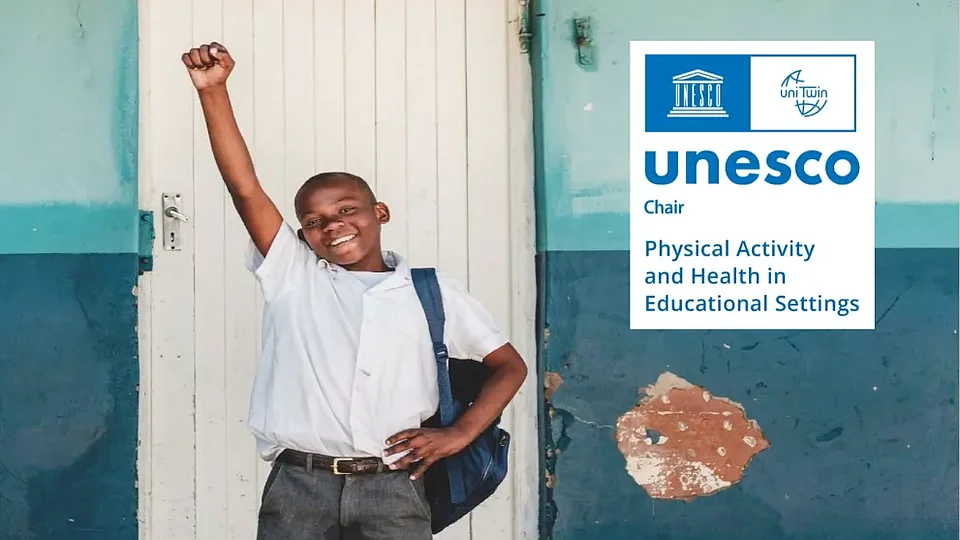
EURAXESS Africa highlights a long-standing research collaboration between Switzerland and South Africa, focusing on its contribution to school health and community wellbeing.
A long-standing research partnership between the University of Basel, Nelson Mandela University and the Swiss Tropical and Public Health Institute (Swiss TPH) has been featured in a new EURAXESS Africa success story, highlighting how international scientific collaboration can generate practical benefits for education, health and community wellbeing.
Published on 24 October 2026, the article, “Africa-Switzerland Research Success Story: From Science to Stronger Communities”, showcases the work of the UNESCO Chair on 'Physical Activity and Health in Educational Settings' and its commitment to translating research into action. The collaboration builds on institutional relationships established in 2011 and the UNESCO Chair, formally established in 2019.
From research to healthier school environments
At the heart of this collaboration is the KaziBantu initiative, which brings together research, education and community engagement to promote healthier school environments. Its complementary programmes address different aspects of school health and wellbeing:
- KaziKidz provides freely accessible teaching resources for physical education and health education.
- KaziPlay supports healthier school environments and creates opportunities for active play.
- KaziHealth focuses on the health and wellbeing of teachers and school staff.
In May 2026, KaziPlay was recognised by UNESCO as an SDG 4 Good Practice, highlighting its contribution to quality education and healthier learning environments.
Extending collaboration and learning across Africa
The partnership’s experience in South Africa has also informed work beyond its original setting. Educational resources have been adapted in Namibia, while the collaboration has contributed to the development of the Play4Health programme in Nigeria, which reported reaching approximately 180,000 learners by the end of 2025. These developments illustrate the potential of sustained international research partnerships to support knowledge exchange, strengthen research capacity and inform practice across different educational and cultural contexts.
A shared commitment to sustainable impact
The EURAXESS Africa feature recognises the value of partnerships that combine scientific expertise with local knowledge and long-term engagement. For the UNESCO Chair, this approach remains central to its work: connecting research, teacher development, Quality Physical Education and community-based health promotion to advance healthier and more inclusive learning environments.
Read the full story on EURAXESS Africa:
Africa-Switzerland Research Success Story: From Science to Stronger Communities
Quick Links